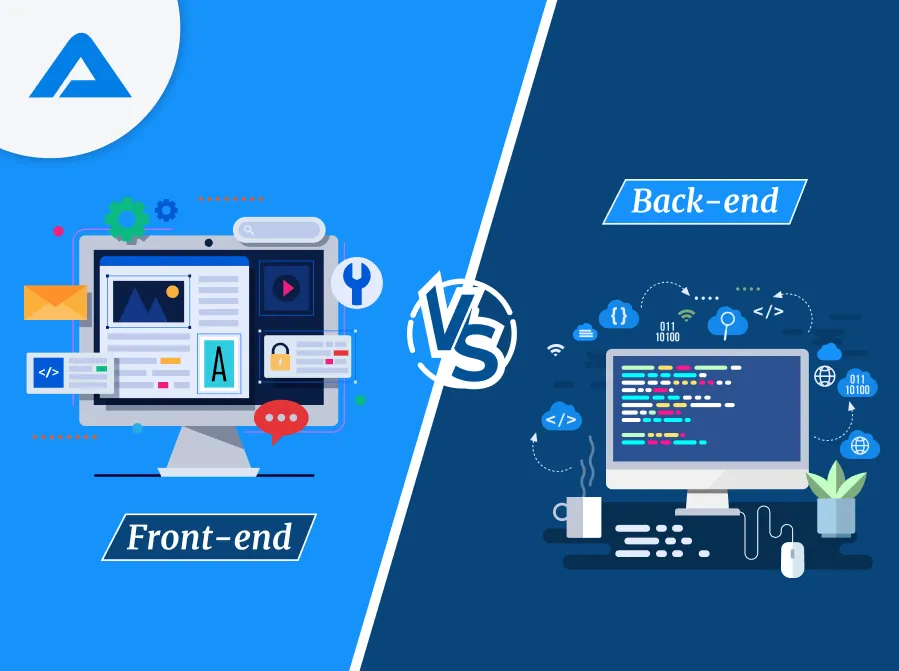
Frontend and backend development are the two basic streams of web development; both have its own focus for building a website or web application. Here's a breakdown of the differences:
Frontend Development
Front-end development refers to building the user-accessible part of the application that is what the users see and interact with in their web browsers.
Technologies Used:
- HTML (Hypertext Markup Language): The structure of web pages.
- CSS (Cascading Style Sheets): Styling and layout of web pages.
- JavaScript: Provides the functionality to make web pages interactive and dynamic.
- Frameworks/Libraries: React, Angular, Vue.js, Svelte, and many more.
Major Tasks:
Create the layout, structure, and design of the website .
Ensure the website is responsive; that is, it should be accessible and viewable on different screen sizes and devices.
Make the site aesthetically pleasing and ensure a good UX.
Manage the client-side logic, for example, what happens when a user clicks the button or submits a form.
Proficient understanding of design principles.
HTML, CSS, and JavaScript skills
Front-end frameworks and libraries knowledge
Responsive design and cross-browser compatibility
Back-end Development
The back-end part of the application is about developing the server-side, i.e., the part that the users do not directly interact with but powers the front-end and does data processing, storage, and server management.
Technologies Used:
- Programming Languages: Python, Ruby, Java, PHP, Node.js, C#, etc.
- Databases: SQL (e.g., MySQL, PostgreSQL) or NoSQL (e.g., MongoDB).
- Server and Hosting: Apache, Nginx, Docker, cloud services like AWS, Azure, Google Cloud, etc.
- APIs: RESTful APIs, GraphQL, WebSockets.
- Frameworks: Django (Python), Express (Node.js), Laravel (PHP), etc.
Core Responsibilities:
- Writing server-side logic that determines responses based on the frontend.
- Managing databases to ensure proper storage, retrieval and update of information.
- Ensuring Data security, integrity, and appropriate interconnection of frontend and backend. Such as using APIs.
- Server management, user authentication, authorization, and authorization.
Skills Required:
- Proficiency in backend programming languages and frameworks.
- Knowledge of databases, relational as well as non-relational.
- Ability to design APIs and integrate third-party services.
- Understanding of server infrastructure, security, and performance optimization.


No comments:
Post a Comment