1. Component-Based Architecture
ReactJS follows a component-based architecture. This means that developers can encapsulate the components and manage their own state while allowing the application for reusing across the application. Thus this approach:
- Speeds up development
- Ensures code reusability and maintainability
- Increases scalability for large applications
2. Virtual DOM for Higher Performance
React uses a virtual DOM to accelerate updates to the actual DOM. When the state of an object changes, only the part of the DOM is updated that changes, not refresh the whole page. This leads to:
- Faster rendering.
- Greater performance for dynamic and complex applications.
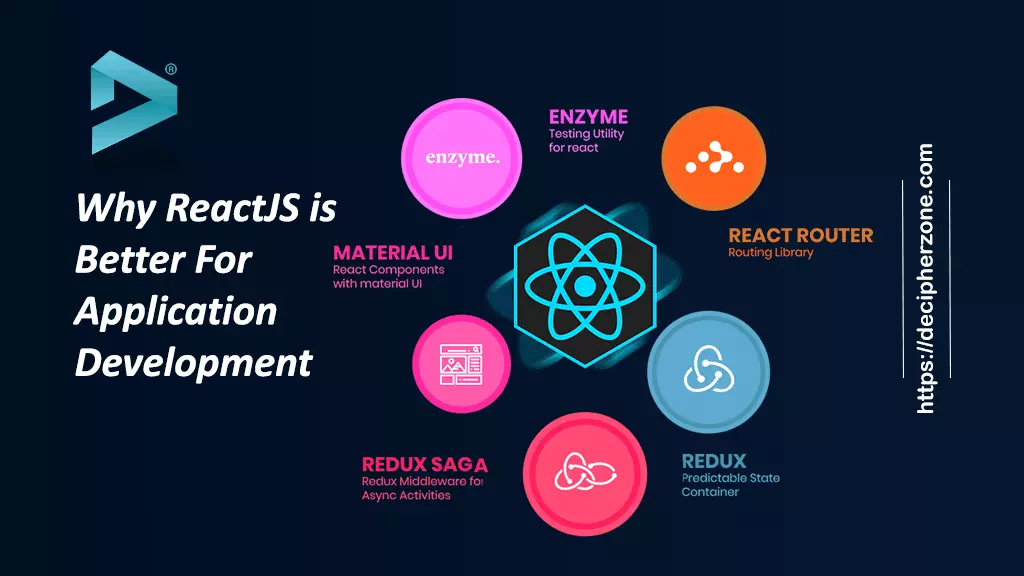
3. Huge Ecosystem and Tooling
- React has a giant ecosystem of libraries and tools with:
- React Dev Tools: debug and inspect the components.
- State management libraries: Redux, Context API, and MobX for complex application states.
- Next.js: a React-based framework for server-side rendering (SSR) and static site generation (SSG).
- This ecosystem simplifies development and enables advanced functionality.
4. SEO-Friendliness
- JavaScript frameworks are typically not SEO-friendly because search engines have a hard time indexing dynamic content. This is solved with React by supporting server-side rendering (SSR) through tools like Next.js, which helps improve the performance of web applications in terms of SEO.
5. Strong Community Support
React has a robust, active developer community that offers the following:
Documentations
- Tutorial, forums, and resource availability for debugging issues
- Frequent updates and enhancement, based on the feedback from community
- It's easier to learn and adapt with help in solving issues.
6. Flexibility and Integration
- React can easily integrate with other frameworks and libraries for customization. Moreover, it's framework-agnostic, and so it works very well along with AngularJS, Vue.js, or even Vanilla JavaScript.
7. Quicker Development with JSX
- React uses JSX (JavaScript XML), which lets developers write HTML structures within JavaScript code. This makes the code more readable and easier to debug, which helps in speeding up development.
8. Strong Emphasis on Mobile with React Native
- Not limited to web development, React Native allows developers to create mobile applications for iOS and Android based on the same principles and components of ReactJS, making it easier for companies to maintain consistency across platforms.
9. Industry Leaders
- React is used by the giants of tech: Facebook, Instagram, Airbnb, Netflix, and many others. Its proven track record powering high-traffic and mission-critical applications proves its reliability.
10. Future-Proof and Scalable
- ReactJS is designed to handle growing applications effectively. Its modular architecture and efficient updates through the Virtual DOM make it suitable for scaling projects as business needs evolve.


No comments:
Post a Comment