
Thursday, 23 January 2025

𝐈𝐦𝐩𝐨𝐫𝐭𝐞𝐧𝐜𝐞 𝐎𝐟 🆅🆄🅴.🅹🆂 𝐢𝐧 𝐅𝐫𝐨𝐧𝐭-𝐄𝐧𝐝 𝐖𝐞𝐛 𝐃𝐞𝐯𝐞𝐥𝐨𝐩𝐦𝐞𝐧𝐭


Vue.js is a progressive JavaScript framework highly used in the development of user interface and Single Page Applications. Its significance in frontend development arises from several reasons:

1. Ease of Use and Learning Curve
  • Vue.js has a simple syntax and clear documentation, making it accessible even to beginners.
  • Developers with basic knowledge of HTML, CSS, and JavaScript can quickly get started.

2. Progressive Framework
  • Vue.js is incrementally adoptable.
  • It can be used for individual components or for building the whole application.
  • This flexibility is suitable for small projects as well as large-scale applications.

3. Two-Way Data Binding
  • Just like Angular, Vue.js supports two-way data binding.
  • This helps in automatic synchronization between the model and the view, which reduces boilerplate code.

4. Component-Based Architecture
  • Vue.js organizes applications into reusable components.
  • This modularity improves code reusability, maintainability, and scalability.

5. Performance Efficiency
  • Vue.js is lightweight and provides fast rendering using a virtual DOM.
  • Its optimization techniques guarantee the smooth running of applications, particularly in dynamic and interactive applications.

6. Reactive Data System
  • Vue.js provides a reactivity system, whereby the UI will update automatically with changes in underlying data.
  • This results in dynamic and responsive experiences for the users.

7. Comprehensive Ecosystem
  • Tools like Vue Router and Vuex help handle complex development work, including routing and state management.
  • This integration makes it an ideal application for SPAs.

8. Huge Community and Industry Adoption
  • Vue.js has a growing community and an extensive ecosystem of plugins and third-party tools.
  • It is used by companies like Alibaba, Xiaomi, and GitLab, which speaks to its reliability and scalability.

9. Custom Directives
  • Vue.js enables developers to create custom directives for reusable logic.
  • This reduces redundancy and promotes clean coding practices.

10. Integration with Existing Projects
  • Vue.js can be integrated into existing projects incrementally without overhauling the codebase.
  • This makes it a preferred choice for modernizing legacy applications.

Conclusion

Vue.js is an important part of front-end web development because it is simple, flexible, and powerful. It enables developers to create fast, responsive, and maintainable applications while catering to the needs of businesses and end-users alike. Its progressive nature, combined with a rich ecosystem, makes it a valuable tool for both beginners and experienced developers.

"We Can Help You Build Your Website – Contact Us Now!"

Tuesday, 21 January 2025

𝐈𝐦𝐩𝐨𝐫𝐭𝐞𝐧𝐜𝐞 𝐎𝐟 🆂🆅🅴🅻🆃🅴 𝐢𝐧 𝐅𝐫𝐨𝐧𝐭-𝐄𝐧𝐝 𝐖𝐞𝐛 𝐃𝐞𝐯𝐞𝐥𝐨𝐩𝐦𝐞𝐧𝐭


1. Performance Efficiency

     No Virtual DOM:

  • Svelte does not use the virtual DOM that other frameworks like React and Vue use. It directly updates the real DOM, which results in faster runtime performance.

     Smaller Bundle Sizes:

  • The compiled output is minimal, thus reducing the load on the browser and ensuring faster page loads.


2. Developer Productivity

      Simplified Syntax:

  • Svelte uses a straightforward, declarative syntax that is easy to learn, making it beginner-friendly.

      Built-In Reactivity:

  • State management is integrated at the core of Svelte. Any change to the variables triggers UI updates with less boilerplate code.


3. Reactive and Declarative Programming

  • Svelte simplifies reactive programming. Dynamic UIs can be created easily by developers.
  • Reactive logic is written with ease because it is easy to update variables in Svelte, with an intuitive reactivity model.


4. Rich Animations and Transitions

  • Svelte offers great support for built-in animations and transitions with less configuration.
  • Custom animations can be implemented easily, enhancing user experiences.


5. SEO-Friendliness

  • Svelte’s server-side rendering (SSR) capabilities make it easier to create SEO-optimized web applications, improving search engine rankings.


6. No Runtime Overhead

  • Svelte compiles components into efficient, standalone JavaScript at build time. This eliminates the need for a client-side framework, resulting in faster apps.


7. Ecosystem and Tooling

SvelteKit:

  • A robust application framework built on Svelte that simplifies routing, server-side rendering, and other advanced functionalities.

Rich Plugin Ecosystem:

  • Preprocessors and TypeScript and CSS preprocessors are supported for flexibility in development.


8. Best Use Cases for Svelte

     SPAs:

  • Quickly develop interactive SPAs with minimal setup.

     Small Projects and Prototypes:

  • Develop prototypes or smaller applications using the lightweight structure of Svelte.

     Static Sites:

  • Build blazing-fast static sites with ease using SvelteKit.

     Data-Driven Dashboards:

  • The reactivity of Svelte is ideal for dynamic dashboards and visualizations.

9. Community and Adoption

  • Svelte also boasts an enthusiast and growing community. Its simplicity attracts several developers from varying backgrounds.
  • App companies like Apple, Square, and The New York Times use Svelte in their respective projects, assuring its application in real-world solutions.

"We Can Help You Build Your Website – Contact Us Now!"

Monday, 20 January 2025

𝗜𝗺𝗽𝗼𝗿𝘁𝗲𝗻𝗰𝗲 𝗢𝗳 𝗻𝗼𝗱𝗲.𝗷𝘀 𝗶𝗻 𝗯𝗮𝗰𝗸-𝗘𝗻𝗱 𝗪𝗲𝗯 𝗗𝗲𝘃𝗲𝗹𝗼𝗽𝗺𝗲𝗻𝘁


1. Asynchronous and Event-Driven Architecture

  • Node.js works on a non-blocking, event-driven architecture. It can serve many requests at a time. Therefore, it is highly suitable for building real-time applications such as chat apps, gaming servers, and live-streaming platforms.


2. High Performance

  • Built on the Google Chrome V8 JavaScript engine, Node.js runs JavaScript code at high speed. It is designed to handle high-throughput scenarios, like API calls in microservices architecture.


3. Single Programming Language

  • Node.js allows developers to use JavaScript for both frontend and backend development, thus making it possible to do full-stack development with one language. This reduces the learning curve and increases productivity.


4. Rich Ecosystem

  • Node.js has a rich ecosystem of libraries and packages available through npm (Node Package Manager). Libraries help speed up development by providing prebuilt solutions for common functionalities.


5. Scalability

  • Node.js supports microservices architecture and enables horizontal scaling, which means applications can be distributed across multiple servers. This makes it suitable for building scalable systems.


6. Real-Time Applications

  • Node.js excels in building real-time applications such as chat applications, collaboration tools, and gaming applications due to its WebSocket protocol support and ability to handle concurrent connections efficiently.


7. Cross-Platform Development

  • It makes use of tools such as Electron in order to build cross-platform desktop applications using web technologies. It thus reduces the requirement for learning additional languages or frameworks.


8. Active Community Support

  • Node.js possesses a large active developer community that contributes towards its improvement and provides much resource, tutorials, and support regarding troubleshooting.


9. Microservices Compatibility

  • Node.js is used in the majority of the modern software architectures like microservices due to its lightweight and modular nature. It helps developers build services that are small, focused, and independently deployable.


10. Developer Tools

  • Node.js provides a wide range of debugging, monitoring, and optimization tools for applications. Frameworks such as Express.js further simplify the backend development, making it faster and more efficient.


Use Cases

  • APIs: RESTful APIs and GraphQL services.
  • Streaming Services: Netflix and other streaming services use Node.js for data streaming.
  • IoT Applications: Because of its lightweight nature, Node.js is excellent for IoT applications.
  • E-commerce Platforms: It supports real-time updates and scalable architecture.

"We Can Help You Build Your Website – Contact Us Now!"

Friday, 17 January 2025

𝐖𝐡𝐚𝐭 𝐢𝐬 𝐚 𝐛𝐨𝐨𝐭𝐬𝐭𝐫𝐚𝐩? 𝐇𝐨𝐰 𝐈𝐭 𝐮𝐬𝐞𝐝 𝐢𝐧 𝐖𝐞𝐛 𝐃𝐞𝐬𝐢𝐠𝐧𝐢𝐧𝐠 & 𝐖𝐞𝐛 𝐃𝐞𝐯𝐞𝐥𝐨𝐩𝐦𝐞𝐧𝐭.


What is Bootstrap?

Bootstrap is the most popular, fully open-source front-end framework for designing and developing responsive, mobile-first websites and web applications. Created by Twitter, it provides pre-designed components, CSS, and JavaScript utilities to make the job of Web design and development easier.

Core Features of Bootstrap

Responsive Grid System

It uses a flexible 12-column grid layout to develop responsive designs that suit any screen size.


Pre-designed Components

Includes pre-designed UI components such as buttons, navbars, modals, forms, cards, and carousels.


CSS Classes

Provision of different pre-defined classes for typography, spacing, and alignment.


JavaScript Plugins

Preparation of JavaScript-based components like tooltips, dropdowns, modals, and sliders.


Customizability

It lets developers override default styles or even extend functionality through custom CSS and JS.


Browser Compatibility

Suits perfectly across modern browsers, and it includes fallbacks for older ones too.


How Bootstrap is Used in Web Designing & Development

1. Responsive Web Design

Bootstrap makes it really easy to make a website which is visually great on desktop, tablet, and smartphones.

The grid system and the responsive utilities change the layout according to the sizes of the screen.

2. Rapid Prototyping

Using pre-built components and templates, developers can easily build rapid prototypes without using custom CSS and JavaScript.

3. Consistent UI

Using standard components will give consistent look and feel to the web pages.

4. Cross-browser Compatibility

Bootstrap reduces inconsistencies in browsers, thereby consuming lesser testing and debugging hours.

5. Minimized Development Hours

The developers need not spend time creating many solutions since most of the features are inbuilt.

"We Can Help You Build Your Website – Contact Us Now!"
Thursday, 16 January 2025

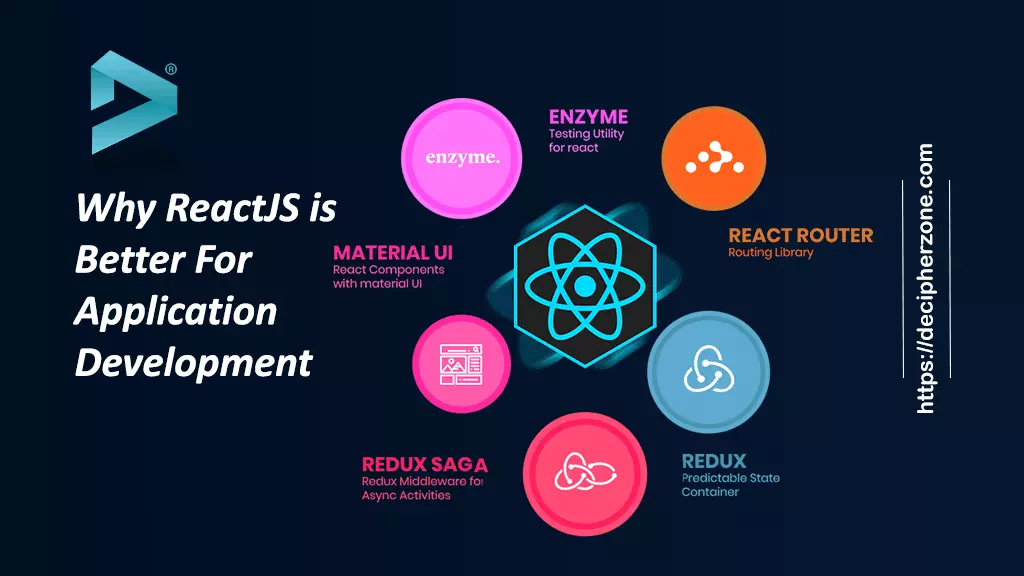
𝐖𝐡𝐲 𝐑𝐞𝐚𝐜𝐭𝐉𝐬 𝐢𝐬 𝐁𝐞𝐭𝐭𝐞𝐫 𝐅𝐨𝐫 𝐀𝐩𝐩𝐥𝐢𝐜𝐚𝐭𝐢𝐨𝐧 𝐃𝐞𝐯𝐞𝐥𝐨𝐩𝐦𝐞𝐧𝐭


1. Component-Based Architecture

ReactJS follows a component-based architecture. This means that developers can encapsulate the components and manage their own state while allowing the application for reusing across the application. Thus this approach:

  • Speeds up development
  • Ensures code reusability and maintainability
  • Increases scalability for large applications


2. Virtual DOM for Higher Performance

React uses a virtual DOM to accelerate updates to the actual DOM. When the state of an object changes, only the part of the DOM is updated that changes, not refresh the whole page. This leads to:

  • Faster rendering.
  • Greater performance for dynamic and complex applications.


3. Huge Ecosystem and Tooling

  • React has a giant ecosystem of libraries and tools with:
  • React Dev Tools: debug and inspect the components.
  • State management libraries: Redux, Context API, and MobX for complex application states.

  • Next.js: a React-based framework for server-side rendering (SSR) and static site generation (SSG).
  • This ecosystem simplifies development and enables advanced functionality.


4. SEO-Friendliness

  • JavaScript frameworks are typically not SEO-friendly because search engines have a hard time indexing dynamic content. This is solved with React by supporting server-side rendering (SSR) through tools like Next.js, which helps improve the performance of web applications in terms of SEO.


5. Strong Community Support

React has a robust, active developer community that offers the following:

Documentations

  • Tutorial, forums, and resource availability for debugging issues
  • Frequent updates and enhancement, based on the feedback from community
  • It's easier to learn and adapt with help in solving issues.


6. Flexibility and Integration

  • React can easily integrate with other frameworks and libraries for customization. Moreover, it's framework-agnostic, and so it works very well along with AngularJS, Vue.js, or even Vanilla JavaScript.


7. Quicker Development with JSX

  • React uses JSX (JavaScript XML), which lets developers write HTML structures within JavaScript code. This makes the code more readable and easier to debug, which helps in speeding up development.


8. Strong Emphasis on Mobile with React Native

  • Not limited to web development, React Native allows developers to create mobile applications for iOS and Android based on the same principles and components of ReactJS, making it easier for companies to maintain consistency across platforms.


9. Industry Leaders

  • React is used by the giants of tech: Facebook, Instagram, Airbnb, Netflix, and many others. Its proven track record powering high-traffic and mission-critical applications proves its reliability.


10. Future-Proof and Scalable

  • ReactJS is designed to handle growing applications effectively. Its modular architecture and efficient updates through the Virtual DOM make it suitable for scaling projects as business needs evolve.


"We Can Help You Build Your Website – Contact Us Now!"


Wednesday, 15 January 2025

𝐈𝐦𝐩𝐨𝐫𝐭𝐞𝐧𝐜𝐞 𝐎𝐟 𝐀𝐧𝐠𝐮𝐥𝐚𝐫 𝐢𝐧 𝐅𝐫𝐨𝐧𝐭-𝐄𝐧𝐝 𝐖𝐞𝐛 𝐃𝐞𝐯𝐞𝐥𝐨𝐩𝐦𝐞𝐧𝐭


 1. Component-Based Architecture

  • Modular Design: Angular's architecture is based on reusable components that are easier to handle, create, and test applications.
  • Encapsulation: Every module owns its logic, template, and styles for a clean separation of concerns.


2. Two-Way Data Binding

  • Real-time synchronization: Angular two-way data binding automatically updates the view when data model changes and vice versa, thus reducing boilerplate code and enhancing productivity.


3. Dependency Injection (DI)

  • Simplified Management: Angular's DI system allows the management of service dependencies easily, leading to better code organization and testability.


4. Built-in Directives

  • Increased Interactivity: *ngFor, *ngIf, and custom directives help developers to dynamically manipulate the DOM and provide interactivity in applications.


5. TypeScript Integration

  • Better Code Quality: Angular is built using TypeScript, which is a superset of JavaScript and offers static typing, improved error handling, and modern ES features.
  • Developer Productivity: TypeScript makes it more readable and maintainable; hence, less runtime error.


6. Rich Ecosystem and Tooling

  • Angular CLI: Angular Command-Line Interface made easy, from setting up a new project to scaffolding to deployments.
  • RxJS: Well-integrated reactive programming aid to better asynchronous data streams handling .


7. Single-Page Applications (SPA)

  • Dynamic Experiences: Angular truly celebrates SPAs, where in it possible for users to interact with the application by not pinging the server much, resulting in a more seamless user experience.
  • Routing: Angular has the powerful router module that controls the application's navigation and state in SPAs.


8. Cross-Platform Capabilities

  • PWA Support: Angular is used to build Progressive Web Apps, integrating features of both web and mobile applications.
  • Native Development: Tools such as NativeScript let Angular developers develop mobile applications.


9. Community and Enterprise Support

  • Large Community: The vast community and thorough documentation make it simpler to get out issues and know about best practices.
  • Trusted by Enterprises: Angular is backed by Google and widely adopted by enterprises for its scalability and maintainability.


10. Long-term Maintenance and Updates

  • LTS (Long-Term Support): Google ensures regular updates for security, performance improvements, and modern features.

"We Can Help You Build Your Website – Contact Us Now!"

Tuesday, 14 January 2025

𝐀𝐧𝐠𝐮𝐥𝐚𝐫 𝐕𝐬. 𝐑𝐞𝐚𝐜𝐭 𝐰𝐡𝐢𝐜𝐡 𝐛𝐞𝐭𝐭𝐞𝐫 𝐟𝐨𝐫 𝐟𝐫𝐨𝐧𝐭 𝐞𝐧𝐝 𝐝𝐞𝐯𝐞𝐥𝐨𝐩𝐦𝐞𝐧𝐭?


What is Angular?

Angular is a robust framework for building web applications, mainly single-page applications (SPAs). Think of an SPA as a website that's more like an application you'd download and has smooth transitions with dynamic updates without loading the whole page. Angular does this by providing a structured development environment. It uses TypeScript, an extension to JavaScript that supports features such as type checking. This makes your code more organized and easier to maintain, especially for complex projects. Angular also separates concerns using the Model-View-Controller architecture, which keeps your code clean and organized by separating data (Model), how it's displayed (View), and how the user interacts with it (Controller). Although Angular is a little steeper in the learning curve, its structure and features are well-suited for building large-scale, enterprise-level web applications.


Key Features of Angular

  • Easy to build, manage, test, and update.
  • Features built-in are Rxjs and AngularCLI.
  • Easy to build, manage, test, and update.
  • Views can be supported without browser-side rendering.
  • Server-side rendering happens pretty fast.
  • Good encapsulation and an easy-to-understand application framework.


What is React?

On the contrary, React is a JavaScript library to build reusable UI components and implement views for client-side web application UI. And whereas Angular relies on a broad framework, react has a highly flexible approach revolving around reusable elements. Think about building blocks being able to hook onto one another. In this fashion, every component gets its own responsibility, so your stuff becomes easy to understand, easily maintainable and re-usable throughout your program. ReactJS also employs a virtual DOM that serves as a copy of the real web page, in memory. This way, React can detect changes quickly and update only parts of the real DOM, greatly improving performance on dynamic UIs, which update continuously. It is easy to learn and have a faster development cycle due to its emphasis on UI components and less strict structure. It is, therefore, ideal to use when creating interactive web features and single-page applications with emphasis on UI as well as to leverage a large ecosystem of pre-built libraries for numerous functionalities.


Major Features of ReactJS:

  • Declarative views are easier to debug
  • Fewer development time and maximum developer productivity
  • More predictable as well as reusable code
  • Simplistic version upgrade between multiple versions
  • Ideal for mobile development and React Native

"We Can Help You Build Your Website – Contact Us Now!"

Best Patterns Generator Websites for Your Design

  1. Pattern Monster Free online tool to generate seamless SVG patterns. Customizable colors, shapes, and scales. Download in multiple forma...