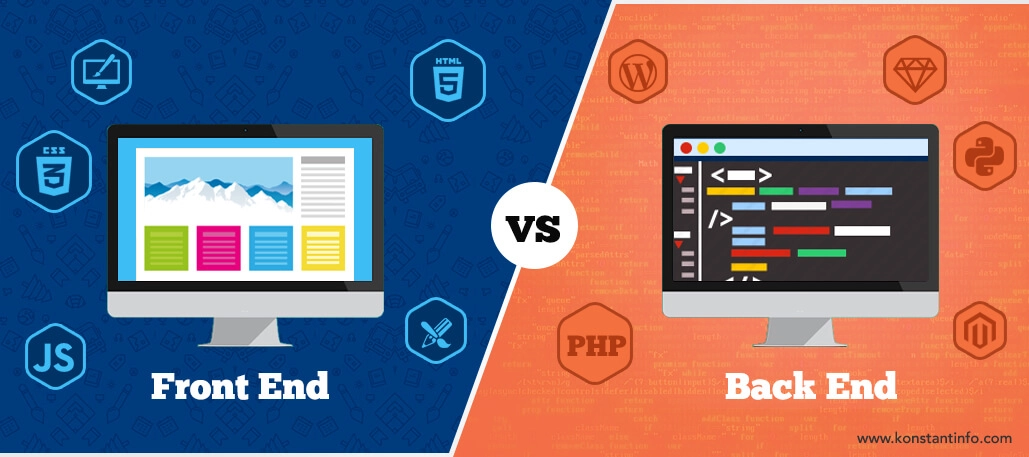
Frontend Development:
The frontend is the side of a website or application that is viewable by users. It emphasizes everything the user will encounter.
Key Responsibilities:
- User Interface(UI) Design: Incorporating visual and layout aspects via HTML, CSS, and JavaScript.
- Interactivity: Animated and interactive functionalities (such as animations, buttons, forms) implemented through JavaScript, as well as by frameworks such as React, Angular, or Vue.js.
- Responsive: Creating responsive designs for a website that adapts to different screen sizes and devices, using techniques such as media queries, flexbox, and grid.
- Performance Optimization: Optimize images, code, and other assets to ensure fast loading and smooth user experience.
- Accessibility: Follow standards like WCAG to ensure the site is accessible to people with disabilitie.
- Cross-Browser Compatibility: Test and correct issues for consistent functionality across various web browsers.
Key Technologies:
- Languages: HTML, CSS, JavaScript
- Frameworks/Libraries: React, Angular, Vue.js, Bootstrap
- Tools: Webpack, Babel, Figma (for design collaboration)
Backend Development:
The backend is the server side of a website or application. It is where data, logic, and infrastructure are managed to support the front end.
Main Tasks:
- Server Management: Server setup, configuration, and maintenance for hosting applications.
- Database Integration: Designing and managing databases for efficient storage and retrieval of data, such as user profiles, content, and transactions.
- Business Logic: Writing server-side code to process user input, perform calculations, and implement features.
- API Development: Creating RESTful or GraphQL APIs to allow communication between the frontend and backend.
- Authentication and Security: Managing user authentication, data encryption, and other security measures to protect sensitive information.
- Performance and Scalability: Ensuring the application can handle high traffic and scale effectively.
Key Technologies:
- Languages: Python, Java, Ruby, PHP, JavaScript (Node.js)
- Frameworks: Django, Flask, Ruby on Rails, Express.js
- Databases: MySQL, PostgreSQL, MongoDB
- Tools: Docker, Kubernetes, Nginx, Apache


No comments:
Post a Comment