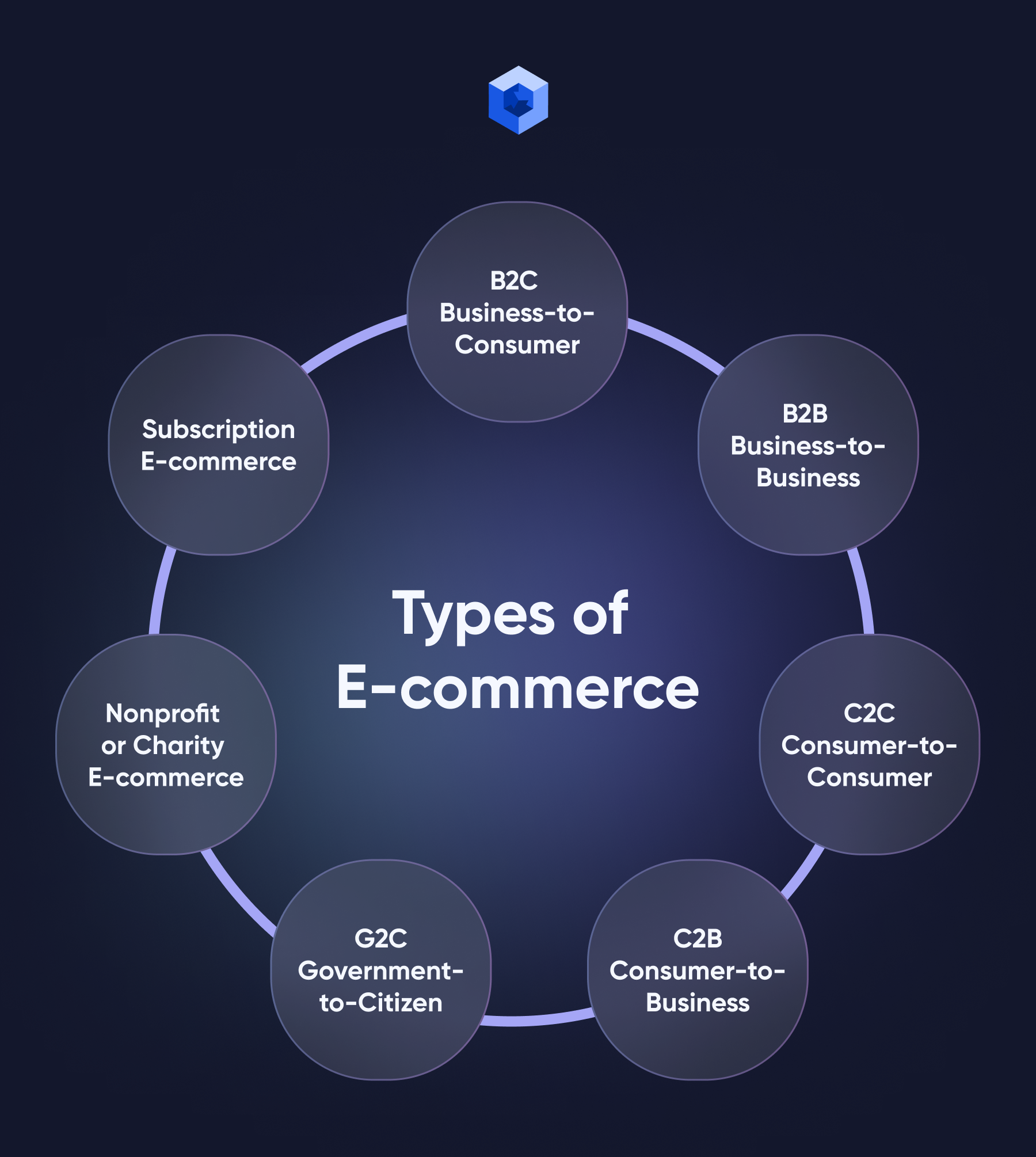
E-Commerce Websites:
An e-commerce website is an online place where commercial entities and customers can buy or sell products or services. Such websites facilitate online transactions by hosting a digital storefront in which products are displayed, and actual payment options are integrated for secure purchases.
Types of E-Commerce Websites:
1. Business-to-Consumer (B2C) E-Commerce Websites:
This is the most common type of e-commerce website. B2C websites allow direct sales from companies to individual consumers.
Example: Amazon, Walmart, Zappos, Target, Best Buy.
Features:
* Offer a product catalog with descriptions and images.
* Allow customers to have a shopping cart and check out.
* Integration of a payment gateway (credit/debit card, digital wallets).
* Customer reviews and ratings.
* Order tracking.
Use Case:
Retail products such as clothing, electronics, groceries, etc., are sold to consumers. Customers can browse, compare, and purchase items online.
2. Business-to-Business (B2B) E-Commerce Websites:
B2B websites enable businesses to sell their products or services to other businesses. The vast majority of the time, these are transactions that include bulk orders or wholesale pricing.
Examples: Alibaba, Thomas Net, Grainger, Made-in-China.com.
Features:
* Bulk pricing and volume discounts.
* Business account registration and login functionality
* Support for invoicing and quotation generation.
* Order history and reordering options available.
* Interface integration with enterprise systems (such as ERP, inventory management).
Use Case:
Wholesale suppliers or manufacturers of raw materials, machinery, or finished goods to other businesses (e.g., a factory purchasing components).
3. Consumer-to-Consumer (C2C) E-Commerce Websites:
C2C e-commerce websites allow consumers to sell directly to other consumers. These websites usually serve as third-party marketplaces through which people can buy and sell goods or services.
Example: eBay, Craigslist, Etsy, Poshmark, Depop.
Functions:
* User profiles and product listings.
* Auction or fixed-price sales.
* Payment processing (usually third-party systems, such as PayPal).
* Seller ratings and feedback systems.
* Messaging systems to facilitate buyer-seller communication.
Use Case:
People are selling used goods, handmade products, or collectibles to other consumers.
4. Consumer-to-Business (C2B) E-Commerce Websites:
C2B websites allow people to sell goods or services to businesses. This model is often adopted by freelancers or service providers; sometimes it is also adopted by consumers when they're selling their data, photos, or content.
Example: Upwork, Freelancer, Shutterstock, 99designs.
Features:
* Job posting or product listing where businesses seek consumer services or goods
* Payment systems for freelance work, sales of content or services.
* Contract management and project tools.
* Reviews and ratings for freelancers or service providers.
Use Case:
Freelancers offering their skills to companies, such as web developers, graphic designers, or photographers.
5. Business-to-Government (B2G) E-Commerce Websites:
B2G websites enable enterprises to offer their wares or services to a governmental agency. It mainly used for purchases or public sector contracts.
Example: FedBid, GSA Advantage (U.S. Government Services Administration), GovWin.
Features:
* Government-specific procurement and tendering systems.
* Secure portals for bidding and submitting proposals.
* Regulatory compliance with government contracts.
* Electronic invoicing and contract management.
Use Case:
Office supplies or construction services offered to a government department by a business.
6. Subscription E-Commerce Websites:
These websites sell products or services on a recurring subscription model, where customers receive regular deliveries or access to a service.
Example: Netflix, Spotify, Dollar Shave Club, Birchbox.
Features:
* Subscription management system (e.g., monthly or annual billing).
* Customization options (e.g., product selection based on user preferences).
* Automatic recurring payments.
* Delivery management for physical products (e.g., monthly subscription boxes).
* Content access or streaming features for digital services.
Use Case:
Customers subscribe to products (e.g., beauty care, snacks, or razor blades) or digital content (e.g., video, audio, or software).
"Let’s Create Your Perfect Website – Contact Us Now!"


No comments:
Post a Comment